Le Vieux Loup, his Italian wife, and the Scottish RAF pilot who came back in 1947. A remarkable story of a Resistance hero from Istanbul, a Scottish pilot in the Bois de Boulogne, and the Hour-Angle watches that found their way home.
Two pieces of the twentieth century lay quietly in a country house in Saint-Sauveur-en-Puisaye when Mehmet Ali Rohy died of a heart attack in March 1968. They were not noisy, nor large, heirlooms. They were not gold. They were pin-set steel aviator watches, reference 3210, with a centre second hand and a rotating bezel that were both regulated for sidereal time. Today they are known as Longines Lindberghs, Hour-Angle watches of the kind Charles Lindbergh had sketched out for navigation over open ocean in 1930. The two timepieces had been bought from the Swiss agent Wirth in Geneva in February and May of 1938, when the world was already sliding into catastrophe.1
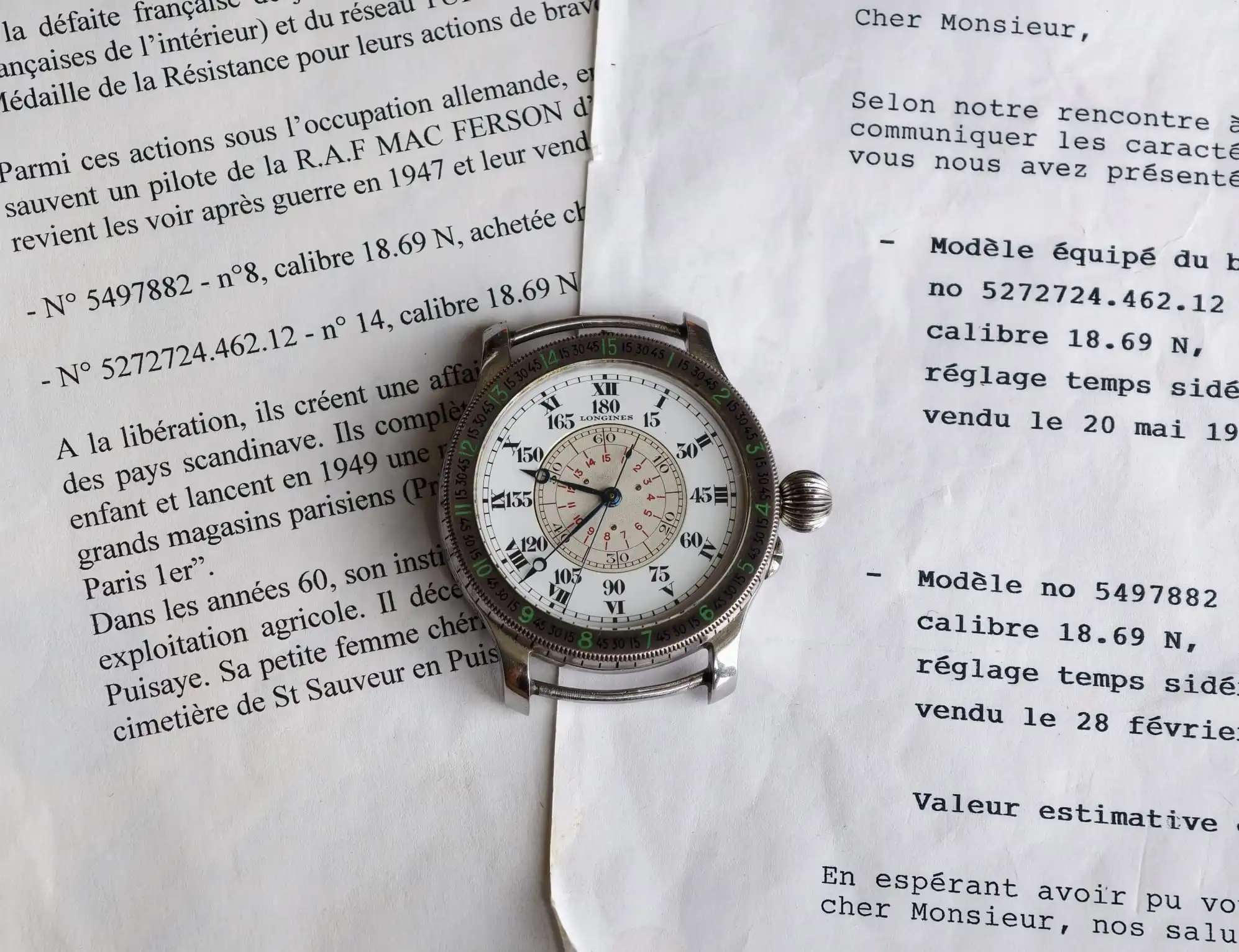
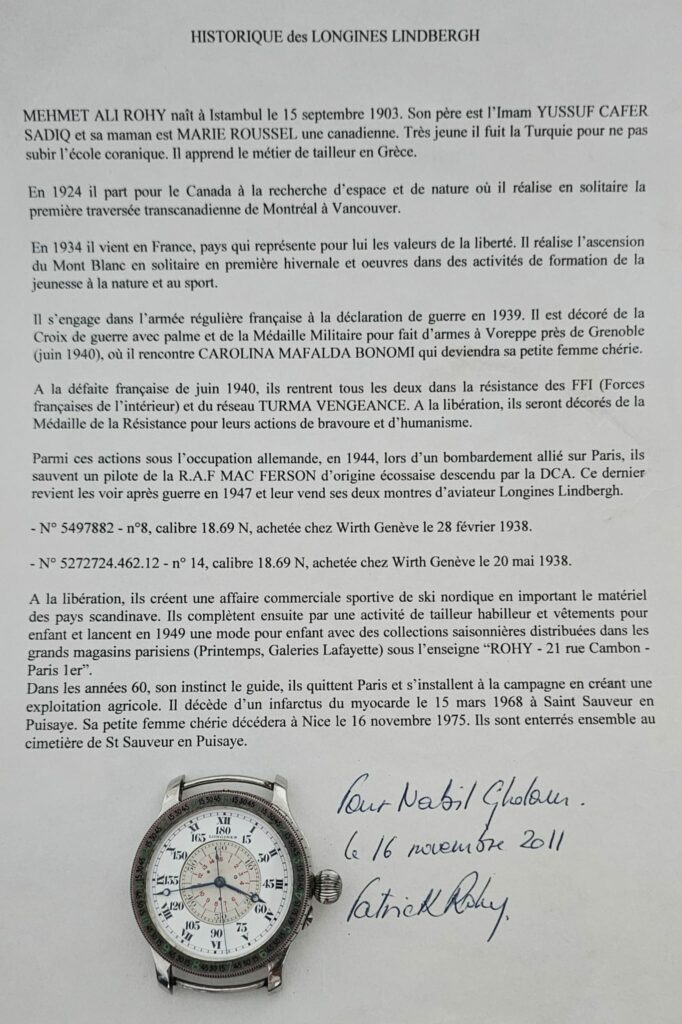
Their owner, a Turkish-born French Resistance fighter known to his comrades as le Vieux Loup, the Old Wolf, never wrote down how he came to own them. The story has survived only through his only son Patrick, who set it out in a single typed page on 16 November 20112 and included a 1988 Longines archive enquiry he made for two hour angle watches. It was exactly thirty six years to the day after his mother died in Nice. It is a family memory carrying with it the suggestion that the Old Wolf’s path may, just possibly, have crossed that of one of the most decorated British soldiers of the war.
The Hour-Angle and the Aviator’s Age
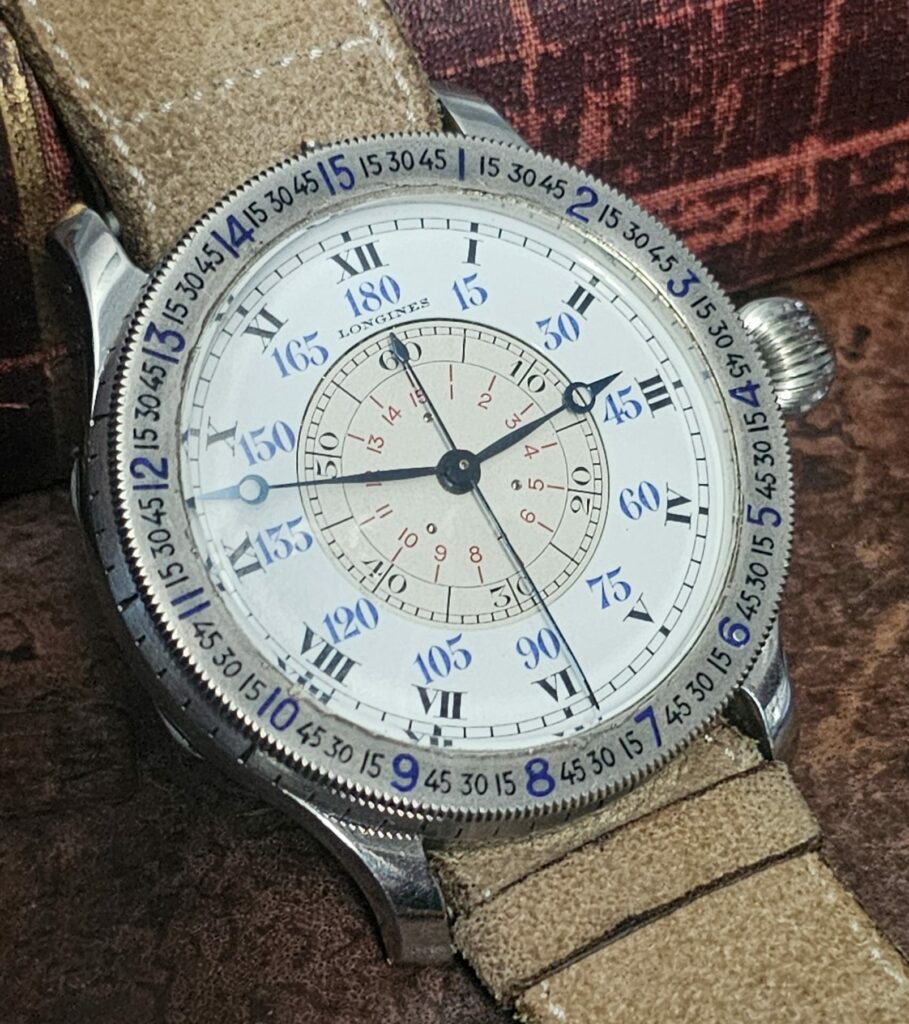
Before radar, before GPS, there was the watch. Between Lindbergh’s solo Atlantic crossing of 1927 and the arrival of mature airborne radar in the 1940s, navigation in the air rested on pilotage, dead reckoning, celestial observation and radio navigation; three of the four required precision time on the wrist. The Lindbergh Hour-Angle, conceived in late 1930 and early 1931 by Lindbergh and developed by Longines with assistance from P.V.H Weems3, supplied it. The dial was calibrated in degrees as well as minutes; the bezel rotated for the equation of time; a rotating inner chapter ring, that Weems was patenting, gave the wearer a resettable seconds dial that could be set against a radio time signal, or known accurate chronometer.
Combined with a sextant fix on the sun, the watch gave the pilot his line of longitude. Charles and Anne Morrow Lindbergh themselves carried Hour-Angles on their survey flights of 1931 and 1933. Harold Gatty and Wiley Post used a pair aboard the Winnie Mae during their round-the-world flight in June 1931. Harry Connor used one to navigate Howard Hughes’s round-the-world flight of 1938. But the type’s working life as a frontline instrument was short. The arrival of airborne radar from 1942 and the maturing of radio direction-finding pushed the sidereal Hour-Angle into specialist hands. The two Rohy pieces, delivered in 1938, sit squarely in its brief peak.
Istanbul, Mont Blanc, Voreppe
Mehmet Ali Rohy was born in Istanbul on 15 September 1903, the son of an imam, Yussuf Cafer Sadiq, and a Canadian mother, Marie Roussel. He refused his father’s plan of Islamic schooling, slipped out of Turkey while still young to learn tailoring in Greece, and in 1924 sailed for Canada in search of “espace et de nature”, open country and the values of liberty. There he made what Patrick describes as the first solo transcontinental crossing from Montreal to Vancouver. By 1934 he had moved on to France. He climbed Mont Blanc alone in winter and threw himself into outdoor education for the young: a tailor who could climb, a foreigner who would make a new country his own, a romantic who took on hard things alone.
When France declared war in September 1939, Mehmet, a Turkish national living in Paris, enlisted in the regular French Army as a foreign volunteer, an engagé volontaire étranger under the decree of 12 April 1939. His matriculation number was 162424; he was attached to the 34th Artillery Depot of the First Military Region and served from 1 September 1939 to 25 June 1940, the day after the armistice with Germany was signed at Compiègne. He had been in France for five years, was not a French citizen, and would not become one for some years yet. The Croix de Guerre avec palme he was about to win at Voreppe, and the Médaille de la Résistance he would later win with Carolina under occupation, were both awarded to a Turkish national serving in the French armed forces. He fought for France before he was of it.
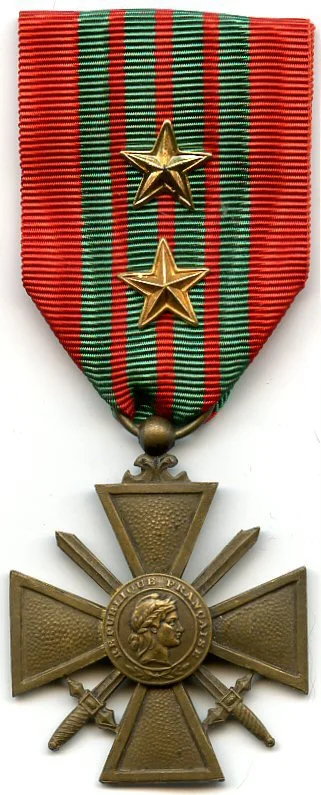
In June 1940, as the Wehrmacht poured down through France and Italian forces pressed across the Alps, Mehmet Rohy was at Voreppe, a small town at the gates of Grenoble. The defenders held the line long enough to matter; the Italians never broke through. For his action there Rohy was decorated with both the Croix de Guerre avec palme, awarded for cited acts of bravery in dispatches, and the Médaille Militaire, a singularly high honour for an enlisted man and an exceptional one for a foreign volunteer. It was at Voreppe, Patrick records, that his father first met Carolina Mafalda Bonomi, “sa petite femme chérie“, his beloved little wife. From the family’s earliest narrative, the name Macpherson, in Patrick’s phonetic spelling Mac Ferson, and the figure of a Scottish RAF flier are stitched into the Rohy story from the very first chapter of the war.
The Old Wolf and the Bourgogne Line
The armistice did not end Rohy’s war; it changed it. Both he and Carolina went into the Forces Françaises de l’Intérieur (FFI) and joined the Resistance network Turma-Vengeance, built around medical, intelligence and sabotage cells in the Northern zone. Mehmet’s file also linked him to Bourgogne, one of the great Paris-based evasion lines. He took the nom de guerre by which his comrades remembered him, le Vieux Loup, the Old Wolf. He was not yet forty. For their work in the underground both Mehmet and Carolina were decorated after the Liberation with the Médaille de la Résistance, for what Patrick’s citation calls actions of bravery and humanity.
None of this is family lore alone. Mehmet Ali Rohy’s service is documented at the Service Historique de la Défense in the Château de Vincennes under the reference GR 16 P 5178705, and he is publicly listed in the Liste de résistants en France under his nom de guerre with a more specific affiliation than the SHD file alone records: he was a member of the Corps Francs Vengeance, the paramilitary action arm of Turma-Vengeance6. He was, in plain terms, an operator.
Of the two networks Mehmet served, Turma-Vengeance is the better-known name in French Resistance history; Bourgogne is more obscure, but for the story of two Longines watches and a downed pilot it is decisively the more important. Réseau Bourgogne was founded in February 1943 by Georges Broussine, a twenty-five-year-old former medical student who had walked out of the armistice army in November 1940 and taken close to two years to reach London, arriving in Britain at the age of twenty-two. The Free French intelligence service (BCRA) turned him around for a single, very specific mission: to return to France and create a network whose only task was the recovery and exfiltration of downed Allied airmen. Operating in formal liaison with the British MI9, Bourgogne moved more than three hundred American, British and Canadian airmen out of occupied France by the end of the war, by train from the gare d’Austerlitz over the Pyrenees to Spain, and from spring 1944 also by Royal Navy motor gun boats off the plage Bonaparte at Plouha in Brittany.7
These were not commandos. The network is sometimes confused with Operation Jedburgh, the SOE/OSS/BCRA programme that parachuted uniformed three-man teams into France from June 1944 to coordinate Resistance action with the Allied advance. The two had nothing operationally in common. Bourgogne’s clients were the casualties of the strategic bombing campaign: American and British bomber crews and fighter pilots shot down over occupied France, who reached the network by parachuting out of stricken aircraft and being passed up the line by civilians who had decided to risk their lives for them. The Bois de Boulogne, on the western edge of Paris under the approach corridors of Allied bombers attacking the marshalling yards at La Chapelle, Le Bourget and Noisy-le-Sec, would have been precisely the kind of place an airman went down and a Bourgogne agent went looking.
The Bois de Boulogne, and Two Watches
In the spring of 1944, in his account of his father’s actions under the German occupation, Patrick Rohy writes that during an Allied bombing of Paris his parents saved an R.A.F. pilot Mac Ferson of Scottish origin, brought down by anti-aircraft fire in the Bois de Boulogne. Three years later, in 1947, the same pilot came back to see them. The verb in Patrick’s account is vend: he sold them his two Longines Lindberghs.
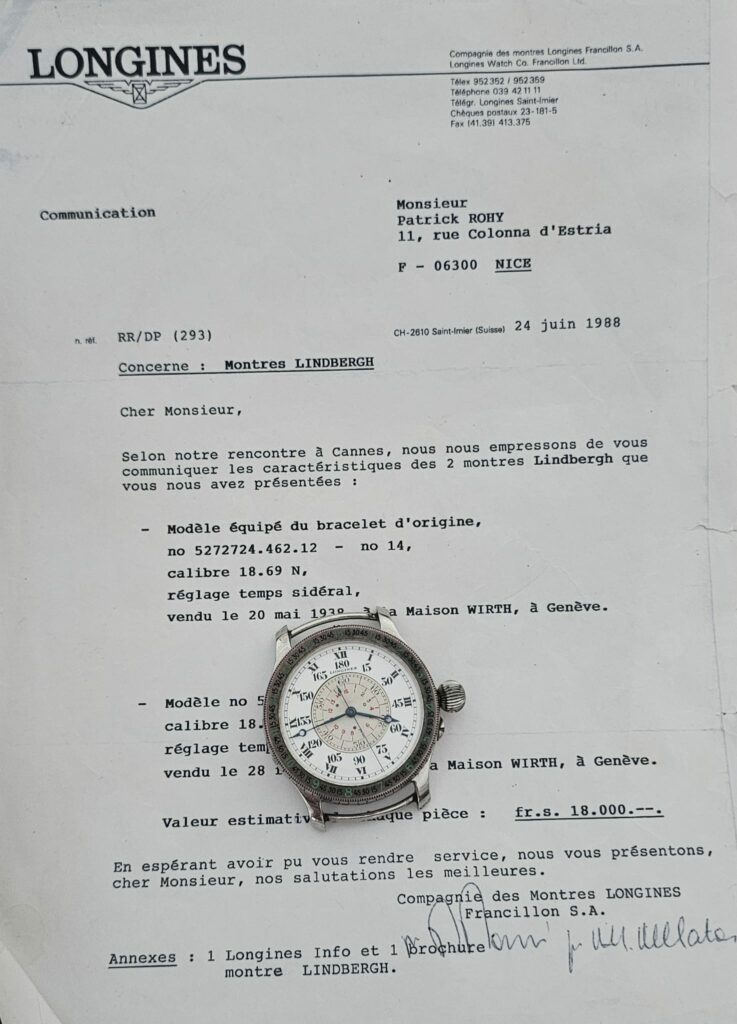
It is a small word that reshapes the colour of the encounter. The pilot did not return with the dramatic flourish of a rescued man pressing his treasures upon his rescuers. He returned to people he trusted, with two valuable watches he had owned since before or during the war, and the transaction was a sale. Whether the price was a few francs or a fair valuation, no one wrote down. A Scotsman of his generation, one is tempted to say, will be grateful with all his heart and still see no reason to give away two perfectly good watches. Whether the money mattered to the pilot for practical post-war reasons, or whether the sale was Mehmet’s own gesture of honouring a man who could no longer accept charity, Patrick does not tell us. What is recorded is that the man came back, that he chose the Rohys as the recipients of these two specific aviator watches, and that they paid him for them.
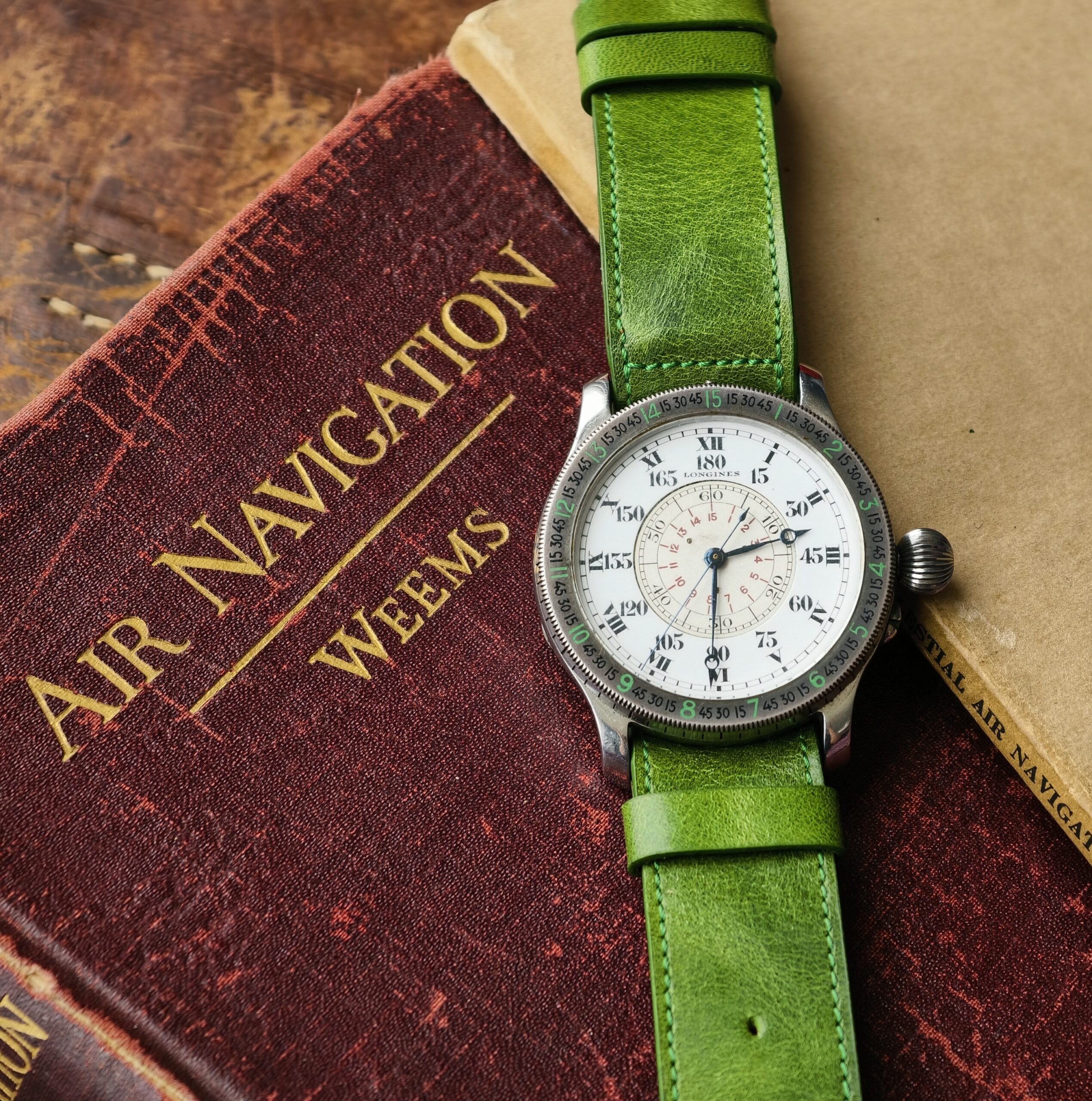
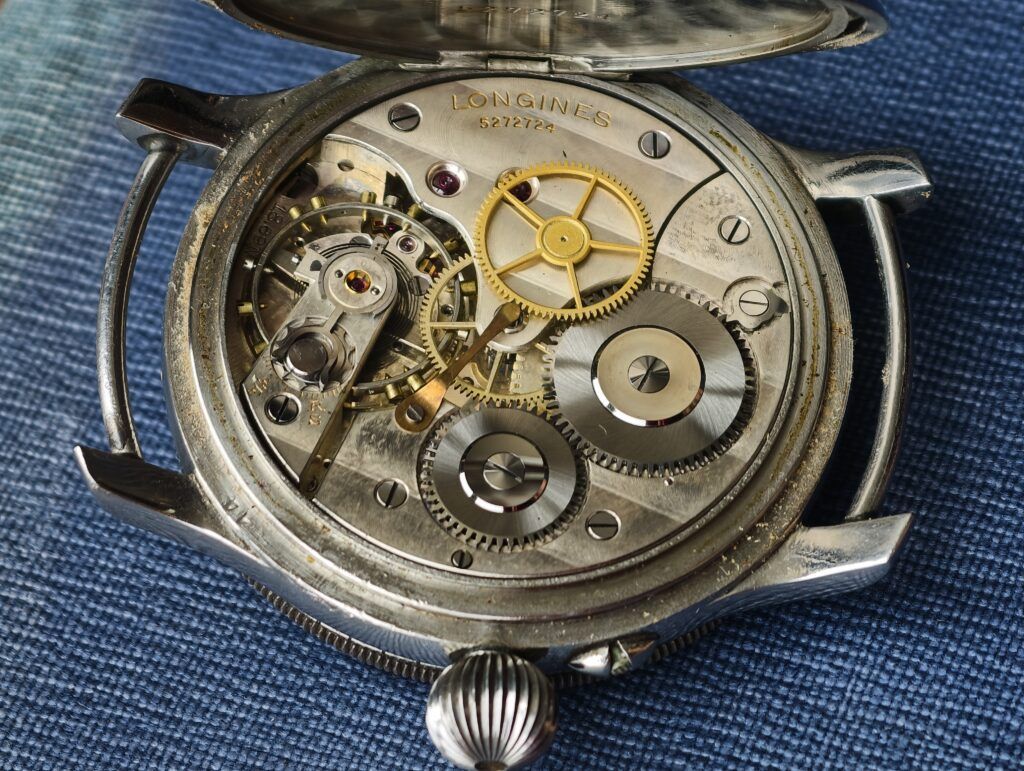
The watches are documented in a way the men around them are not. On 24 June 1988 Longines Francillon S.A. replied from Saint-Imier to Patrick at his Nice address with the details of the two pieces he had brought to a meeting at Cannes: serial 5’272’724, no 14, calibre 18.69N, regulated for sidereal time, sold on 20 May 1938 to the Maison Wirth, Geneva; serial 5’497’882, no 8, same calibre and regulation, sold on 28 February 1938 to the same agent. A modern Extract from the Archives issued on 30 September 2020 confirmed serial 5’272’724 as a Lindbergh type wristwatch in stainless steel bearing the reference 32108. Subsequent enquiries have shown the watches sat in Wirth’s stock for substantial periods before sale, a pattern consistent with retail through a Swiss agent rather than with the military procurement that had been hypothesised.
The Macpherson Question
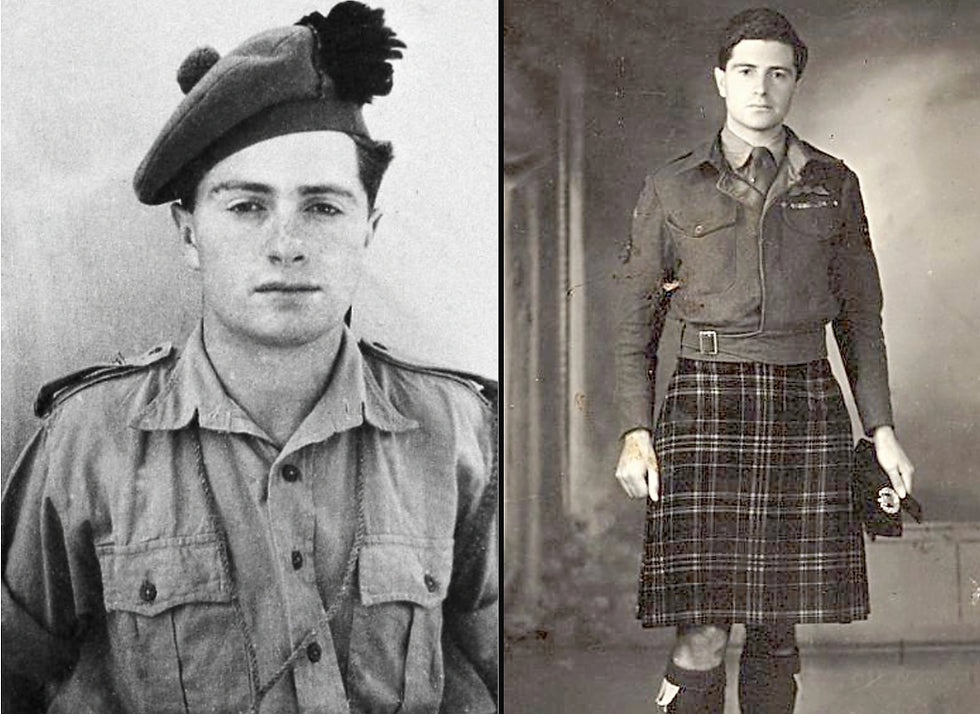
Whose watches? Patrick’s letter gives the pilot a name in the rescue passage itself, Mac Ferson, phonetically spelled, of Scottish origin, RAF. The most famous Scottish wartime Macpherson is Sir Ronald Thomas Stewart “Tommy” Macpherson, the Kilted Killer, born in Edinburgh in 1920, captured during a 1941 raid on Rommel’s headquarters, escaped via Sweden in late 1943, and placed in command of Jedburgh team Quinine, parachuted into Aurillac on the night of 8 June 1944. He wore a kilt under his jumping smock and bluffed an entire Panzer division into surrender. The Military Cross three times, the Croix de Guerre three times, the Légion d’honneur.
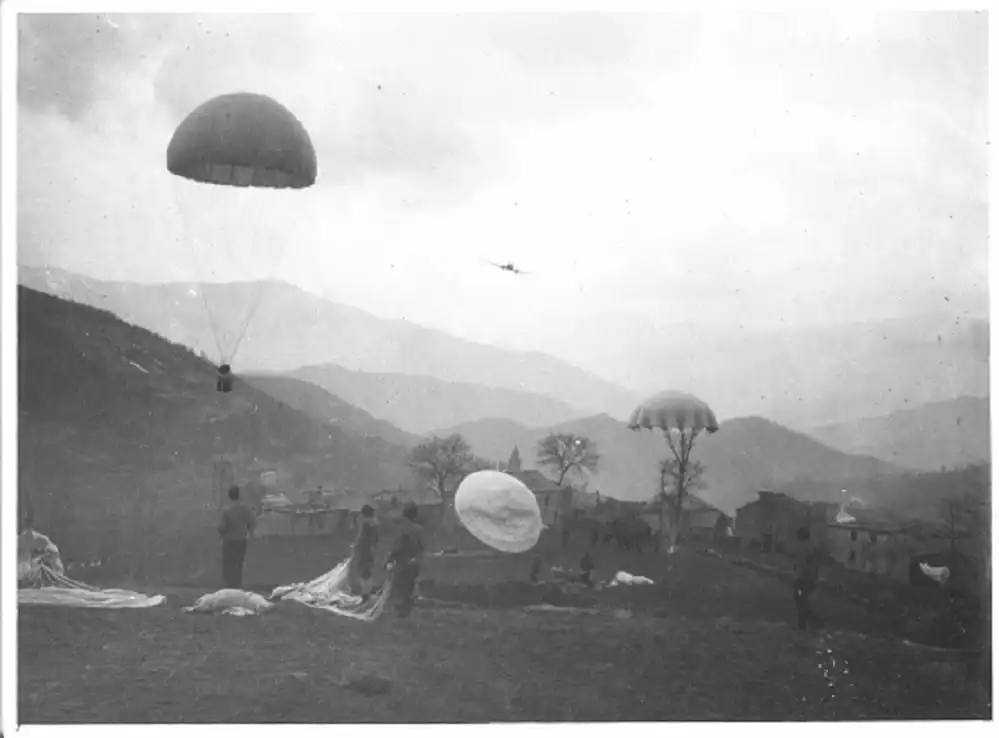
One strand of Sir Tommy’s record gives the question of his identity in the Bois de Boulogne an unusual resonance. His first Military Cross, gazetted on 17 February 1944, was awarded not for sabotage in France but for escape: for the seven attempts from POW camps and the stowaway crossing from Gdynia to Sweden. He was, in other words, an evader himself before he was ever a Jedburgh. The world of safehouses, false papers and civilians risking their lives for a stranger in flying kit was the world he had personally been rescued through. If any decorated Scotsman of the war would have understood, by direct experience, what it cost a Turkish-born artilleryman and his Italian wife to pull a Scottish pilot out of the Bois de Boulogne in 1944, it was him.
Sir Tommy’s profile shares one strong point of contact with the family story, a deeply impressive Scotsman behind the lines in France in 1944, and one obvious point of friction: he was a commando and an SOE officer, not a pilot, and his Jedburgh operations were in Cantal, Lot and Corrèze, not Paris. Sir Tommy’s family is reported by his surviving relatives to have had an uncle living in Lausanne through the 1930s, with the young Macpherson travelling there in the lead-up to the war9, which would have placed a future officer of the Special Operations Executive within easy reach of Longines’s Geneva agent at the moment these particular watches were being dispatched to Wirth. The chain of means and opportunity is not absurd; it is simply not documented.

Beyond that, the Macpherson clan supplied many men to the RAF, and a downed RAF flier of Scottish origin in the Bois de Boulogne in spring 1944 is, sadly, not a unique profile. On the evidence available, the romantic attribution that the Old Wolf’s watches passed through the hands of the Kilted Killer is an attractive possibility rather than a fact. Sir Tommy was famously discreet about names even with those who knew him well, and an encounter in Paris in 1944 lies entirely outside the geography covered by his memoir or by the detailed French-language treatment of his Cantal period10. The question is honourably open.
A Watch With Two Wars in It
Mehmet Rohy did not, after the war, settle into the soft life. He opened a sporting concern with Carolina, importing Nordic ski equipment to a France that was learning to ski again; added a children’s clothing line in 1949 under the label Rohy at 21 rue Cambon, Paris 1er; and traded into Printemps and the Galeries Lafayette. In the early 1960s they walked away from Paris and bought a farm at Saint-Sauveur-en-Puisaye in the Yonne. He died there of a heart attack on 15 March 1968. Carolina lived another seven years and died in Nice on 16 November 1975. They are buried side by side in the village cemetery. Patrick kept the watches for forty-three years, and when he finally let them go he wrote his letter on the anniversary of his mother’s death.
The colourful, factual core of this story is no longer in dispute. A Turkish-Canadian-French boy who would not learn the Quran became a tailor in Greece, a transcontinental traveller in Canada, a winter alpinist in France, an artilleryman at Voreppe, a Corps Francs Vengeance operator and a Bourgogne airman-evader under occupation, and a tradesman of skis in the rue Cambon. The Republic of France has filed him at Vincennes under GR 16 P 517870. The watches are documented too: dispatched from Saint-Imier in 1938 to the Maison Wirth in Geneva, brought back to Paris a decade later by a Scottish RAF pilot the Rohys had saved, sold to that couple in 1947, kept in the family for sixty-four years thereafter. Whether the man who came back with the watches was the most decorated Scotsman of the war, or one of his many compatriots, the records have so far not told us. The watches, eighty-eight years on from the Wirth invoice, are still keeping Longines time. The Old Wolf, somewhere, is presumably amused.
Notes
- Compagnie des Montres Longines Francillon S.A., Saint-Imier, letter ref. RR/DP (293), 24 June 1988, to M. Patrick Rohy, 11 rue Colonna d’Estria, Nice. The letter sets out the two serials, calibres, sidereal regulation and the dates of sale to the Maison Wirth, Geneva. ↩
- Patrick Rohy, Historique des Longines Lindbergh, typed and signed account, 16 November 2011 (original document, photographed in 2026). ↩
- The unit was run by First Lieutenant Albert F. Hegenberger, who had navigated the first transpacific flight to Hawaii in 1927 and would, on 9 May 1932, make the world’s first solo blind flight from take-off to landing in a Consolidated NY-2 over Patterson Field, three years after Jimmy Doolittle’s first hooded-cockpit flight with a safety pilot. ↩
- Base des engagés volontaires étrangers entre le 1er septembre 1939 et le 25 juin 1940, dataset held at the Mémorial de la Shoah, Paris, entry for Mehmet ROHY (unité dépôt d’artillerie n°34, 1re région militaire, matricule 16242). ↩
- Service Historique de la Défense, Château de Vincennes, dossier de résistant Mehmet Ali Rohy, cote GR 16 P 517870; cross-referenced on the open Mémoire des Hommes Base des Résistants under fiche reference 3024716. ↩
- Archives réseau Turma-Vengeance, liste des membres, references 844/16/1-62 and 844/11/1-10, cited in the published Liste de résistants en France entry for “Mehmet Ali Rohy (1903-1968) dit ‘Vieux Loup’.” ↩
- Georges Broussine, L’Évadé de la France libre: le réseau Bourgogne (Tallandier, 2000); Keith Janes, They Came From Burgundy: a Study of the Bourgogne Escape Line (2017). ↩
- Longines Watch Co., Francillon Ltd, Extract from the Archives, Saint-Imier, 30 September 2020, for serial 5’272’724. ↩
- Sir Tommy Macpherson with Richard Bath, Behind Enemy Lines (Mainstream Publishing, 2010). The Lausanne family connection, including an uncle resident there through the 1930s and the young Macpherson’s travels in the lead-up to war, is drawn from private correspondence with the surviving Macpherson family in 2025, not from the published record. ↩
- Manuel Rispal, Chouette, Noisette et Luzettes (Editions Authrefois); private correspondence with the author, 2026, in which Rispal, a post-war regional historian of the Massif Central Resistance who corresponded with Sir Tommy in 1994 and met him in 2006, confirmed that Mehmet Ali Rohy’s name appears nowhere in his Cantal research. Rispal’s reply also pointed to the GR 16 P 517870 file at Vincennes. ↩