In the small perverse universe of documents that collectors of horological and navigational history would quietly sell their kidneys for, a handwritten service invoice from The Longines-Wittnauer Co. Inc, dated 18th August 1937, totalling the grand sum of $1.50 would not usually make the shortlist.
But it should!
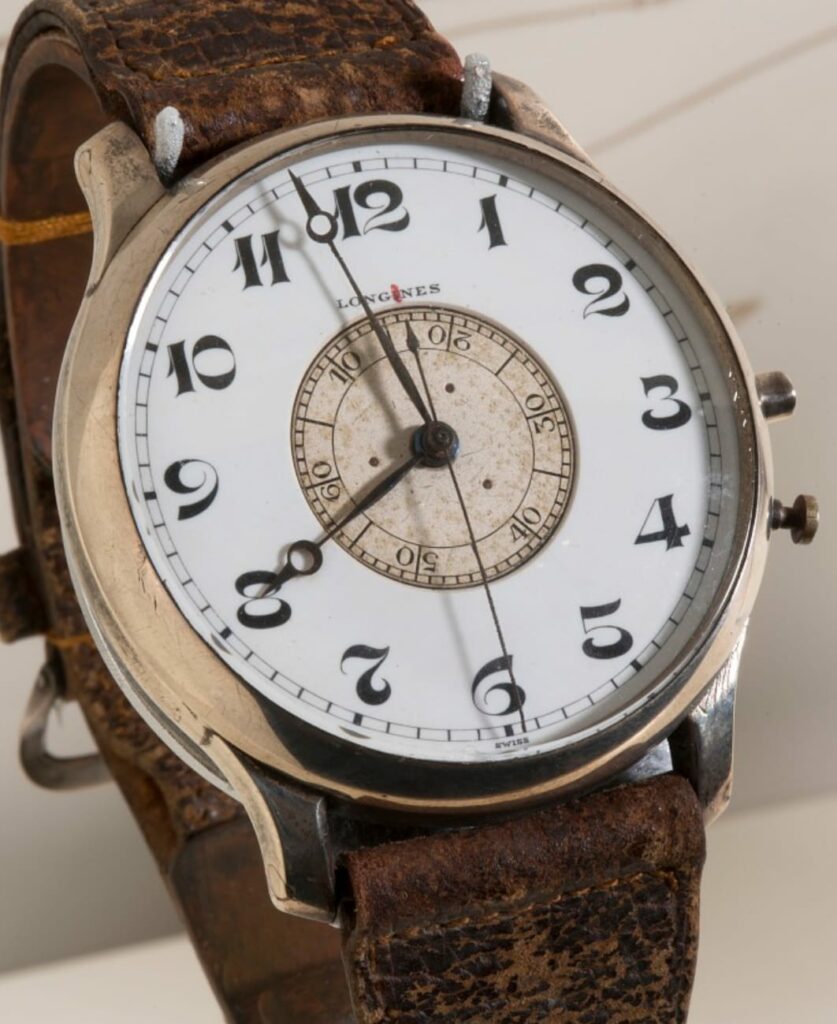
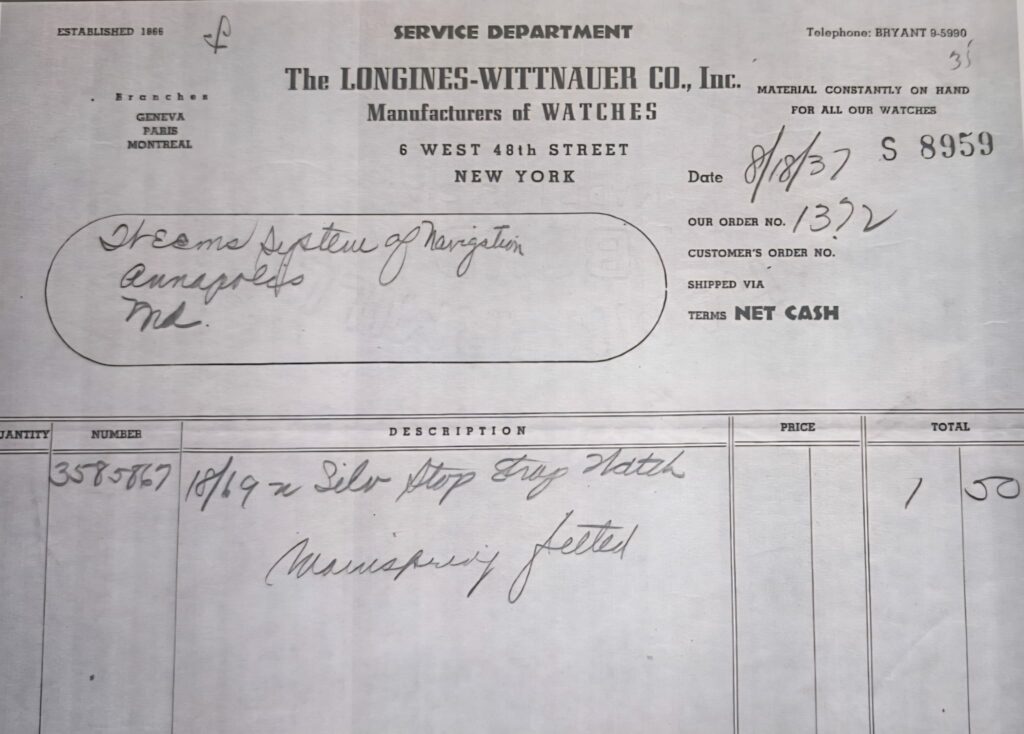
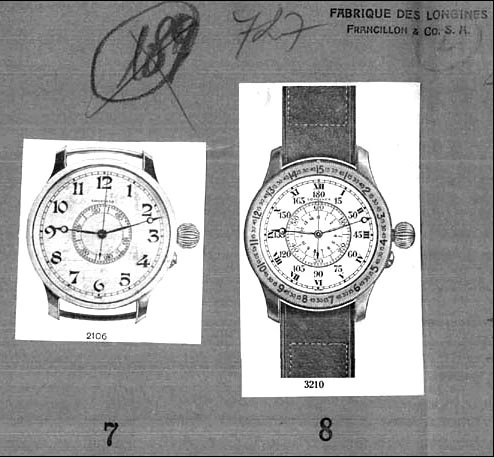
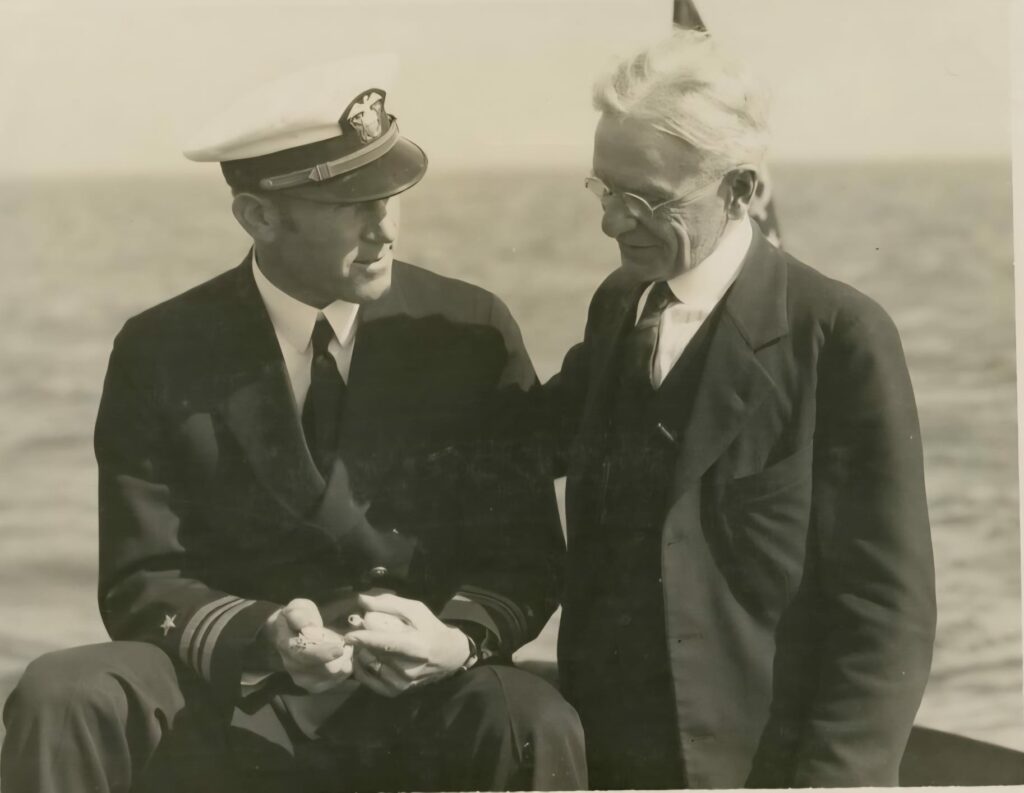
Because that invoice, mailed to Weems System of Navigation in Annapolis, Maryland, documents a new mainspring fitted to an 18.69 silver strap watch with movement and serial number 3585867. The watch with this serial number is not just any Longines. It is the world’s first Weems second setting wristwatch. It is the original prototype noted in the St Imier maker’s archives as being delivered on the 30th of November 1928 to Wittnauer, their US agent. It was specially developed, built and the personal watch of Captain Philip Van Horn Weems of the USN, the multi-decade grandmaster of air navigation.
Why does this Weems prototype watch matter?
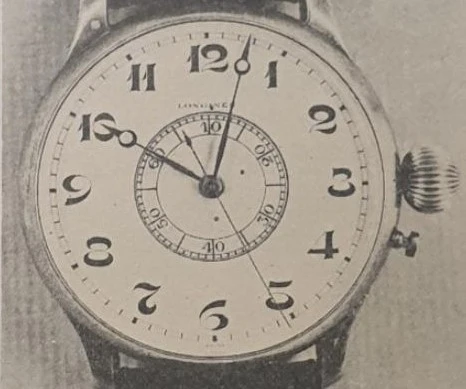
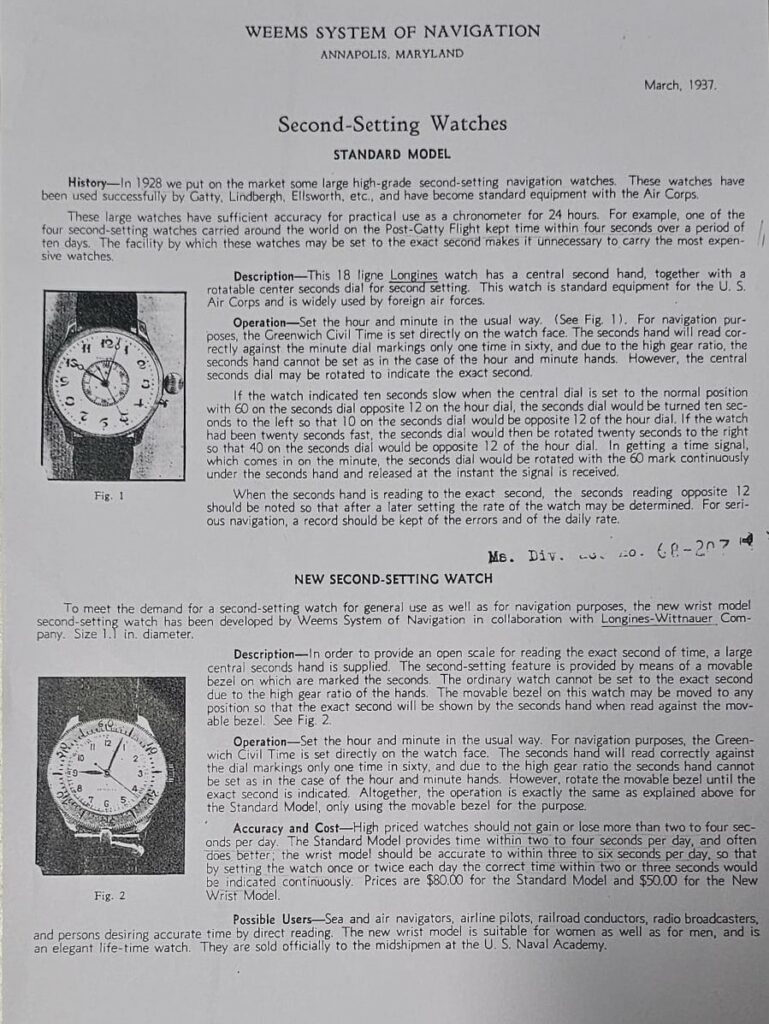
Before Weems got to work in the late 1920s, synchronising a watch to a radio time signal was fiddly: you stopped the movement, waited for the tick, then set it running again and hoped you hadn’t bumped the moment. The Longines Weems second setting wristwatch first introduced a rotating seconds disc that could be turned independently of the running movement, so a navigator could align the seconds to the famous BBC time pips that had been introduced in February 1924 by Sir Frank Dyson.
All this could be done without ever interrupting the watch itself. Paired with Weems’ sight-reduction tables and his plotter, it turned a bouncing open cockpit into somewhere a single pilot could fix their position by the stars or make a better dead reckoning calculation. However, Weems devised the design for the Longines-Weems second setting wristwatch. The model was first wrist watch to introduce a rotating seconds disc that could be turned independently of the running movement, so a navigator could align the seconds to the famous BBC time pips that had been introduced in February 1924 by Sir Frank Dyson.
All this could be done without ever interrupting the watch itself. Paired with Weems’ sight-reduction tables and his plotter, it turned a bouncing open cockpit into somewhere a single pilot could fix their position by the stars or make a better dead reckoning calculation. This small invention is what made aviation possible to the extent it is possible today; to know where to go, you must know first where you are.
Before Weems’ advancements through the 1920’s, synchronizing a watch to a radio time signal was a fiddly affair. The movement of the watch would have needed to be stopped entirely, waited for the tick, and then when set once more, the user could only hope that the time he’d estimated all of that to be done in was correct. The term was described as the ‘blind minute’, a grey area where the exact time could only be approximated. Such small seconds missed here and there could lead to huge faults in aviation- missing a fuel stop or land mass was entirely possible.
Longines made two unique prototypes by repurposing old stock dual time Turkish pocket watch movements. The repair invoice from 1937 with serial 3585867 is Weems’ own personal second setting watch. This incredible timepiece resides and is on display in the Smithsonian. The other, a serial number higher, is documented in only two places- the Longines archive and on flightbirds.net. A French-language internal Longines archive note, describes the prototype watch as, “Échant(illon) Weems pour Navigation”, translating to, “Weems sample for Navigation”.
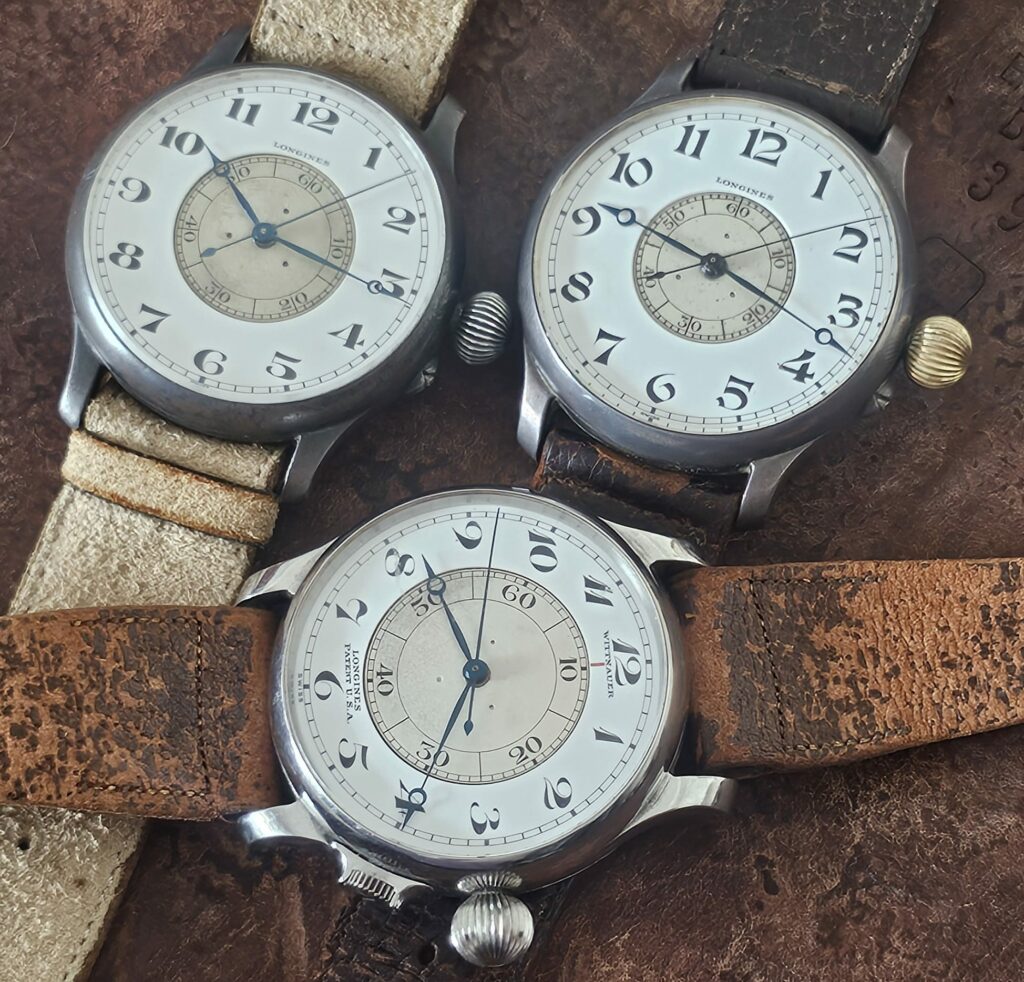
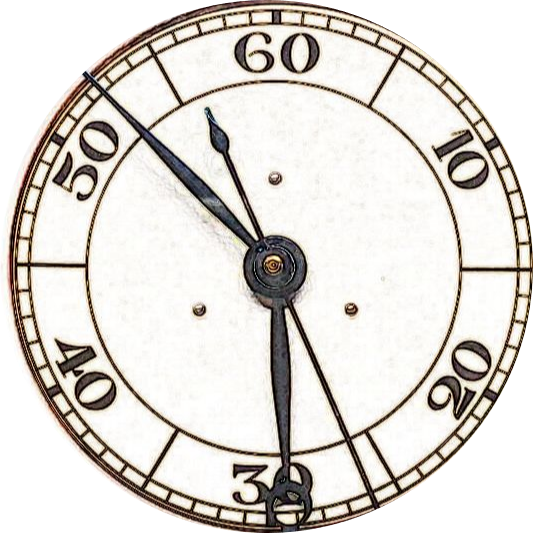
The two watches had a small 18.5mm inner rotating seconds chapter that mirrored that of the dual time Turkish Touran pocket watch from which they heralded. Wittnauer’s first production order #1395 placed prior to the Great Depression in 1929 arrived over multiple dates in the early months of 1930. The complete order contained 72 watches – all were delivered with an enlarged 21mm inner chapter to increase legibility. In essence, the watches had evolved into functional tools, detailed in Weems correspondence with the US Naval Observatory Superintendent, Captain Freeman in 1929.
So: a watch that was the actual Longines prototype central to the progression of radio navigation and one that helped teach and aid pilots and air forces to determine where they are and find their way home. Fair enough.
Now, About That $1.50…
The invoice is a small footnote of 1937 commerce. Longines Wittnauer Co.,Inc (shortly after the new entity formed) Established 1866. Branches: Geneva, Paris, Montreal. Along the top, in a neat banner: ‘Manufacturers of WATCHES. Material constantly on hand for all our watches’. Handwritten into the date field: 8/18/37. Written out below in a brisk service-desk hand: 3585867, 18/69 Silver Stop Strap Watch. Mainspring fitted. 1.50.
Terms: **NET CASH**. Because apparently even Philip Van Horn Weems didn’t get thirty days to settle up.
A few things are worth savoring here.
First, the prototype had been in service for roughly nine years before it needed a new mainspring. Nine years. Continuous running, likely through humid Annapolis summers, likely on the wrist of a naval officer who was not famous for sitting still. If your smartphone battery makes it to year three you throw a parade; Weems got most of a decade out of a coiled strip of steel the thickness of a fingernail, and only then did it ask for a replacement.
Second, $1.50 isn’t just cheap, it documents the kind of service that has effectively ceased to exist long ago. Try walking into the Longines agent today and asking for “just a new mainspring, please.” You can’t. Today, any service work at the agent is complete: movement out, stripped, cleaned, lubricated, reassembled, regulated, and you’ll be smiling if the bill comes in under 1,000 CHF. CPI will tell you $1.50 in 1937 is the equivalent of perhaps 10 to 15 cups of coffee today, but that’s the wrong yardstick entirely.
The real comparison is that in 1937 an experienced watchmaker could open the back of a prototype, fit a new spring, close it up again, and send it back out the door for the price of lunch and think nothing of it. Today, nobody at the agent level would touch the watch without doing the whole job, charging accordingly, and quite possibly refusing to work on a prototype of that provenance at all without a conversation with the museum’s registrar first.
Third, the transaction was utterly routine on both sides of the counter. Someone at Longines-Wittnauer’s service desk on 6 West 48th Street, New York, opened one of the most historically significant watches the company would ever build, fitted a new mainspring, closed it, wrote an invoice, and sent it south to Annapolis with the same energy as any other Tuesday service job. No ceremony. No commemorative plaque. No note for posterity.
This is the quietly important part, there was no ceremony from the other end of the counter either. Weems didn’t send it in with a cover letter about what it was. He didn’t ask for special handling. He sent it in because it had stopped keeping time properly after nine years of use, and he wanted it to work again. That is what you do with a tool.
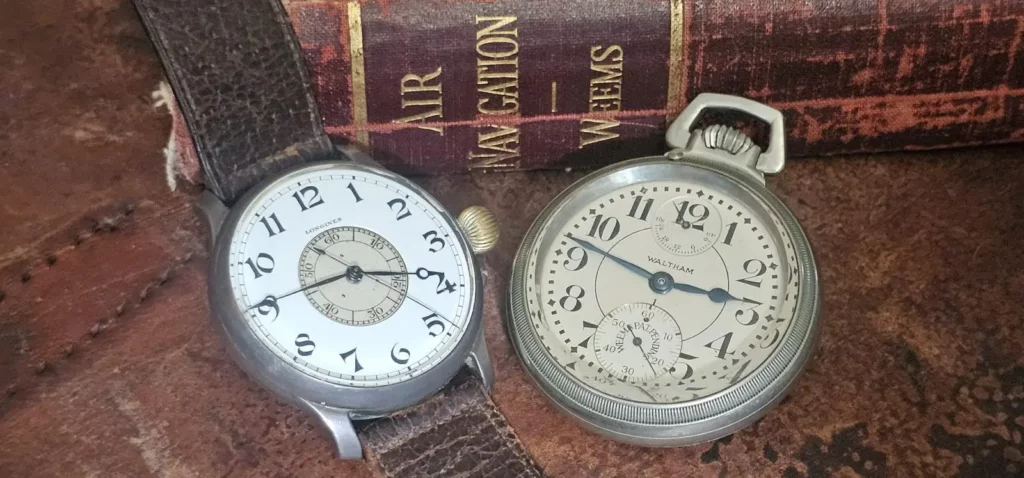
Which is in the end, what the Weems second setting watch was at that time. Not an heirloom. Not an artefact. A working instrument, built to solve a specific problem, getting accurate celestial time into a pilot’s cockpit and increasing the accuracy of dead reckoning calculations. There were no influencers. It was to be worn, used, and serviced accordingly. Nobody involved in that August 1937 transaction, from the service-desk clerk to the man who had designed the thing, treated it as anything other than a watch that needed a new mainspring. Its historical weight only became visible with altitude, distance and time. Ninety seven years on, we can see what they couldn’t: that the Weems wristwatch with 3585867 was a pivot point in the history of radio navigation in the air, a bridge from the Waltham and Hamilton pocket watch Aerochronometers sitting on the navigator’s table that preceded it and the GPS unit that we now see and use on our phones and in every modern cockpit today. At the time, it was just a watch that worked, designed and worn by the man who brought it to life, and serviced for the price of lunch or two.
Just: “Mainspring fitted – $1.50.”
This piece was an essential instrument for radio navigation – a defining chapter filled with real aviators and aviatrix chasing speed, altitude, distance records over land and sea whilst exploring some of earth’s final frontiers during aviation’s so called golden age. It was the first of its kind and created by a man who made a profound multi decade contribution to air navigation. Where is this remarkable legendary Longines watch icon now? Today, Weems’ personal second setting prototype with serial number 3585867 rests in the Smithsonian, doing what museum pieces do: being admired at a polite distance by visitors who mostly don’t realize what they’re looking at, with just a few understanding its significance in the annals of air navigation and horological history. It may have had a new mainspring fitted after 1937, we will never know.
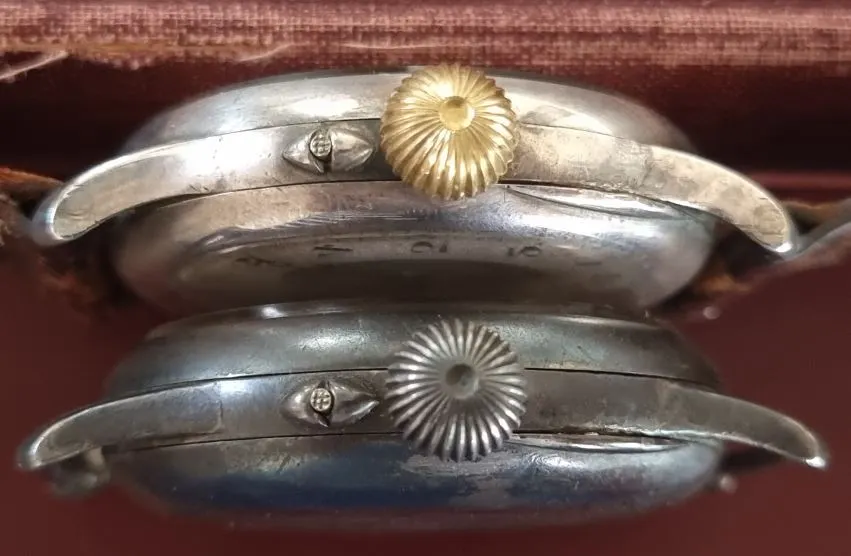
Sadly however, the watch’s gilded crown is missing. Had it gone in for a replacement decades ago, presumably the service desk would have written up another invoice and billed him another dollar or two and change. Perhaps it’d been lost in a pocket, a desk drawer, the Atlantic or the US Naval academy- the answer itself is lost to time. The watch that once knew precisely where it was, to its seconds, no longer knows where its own crown went.
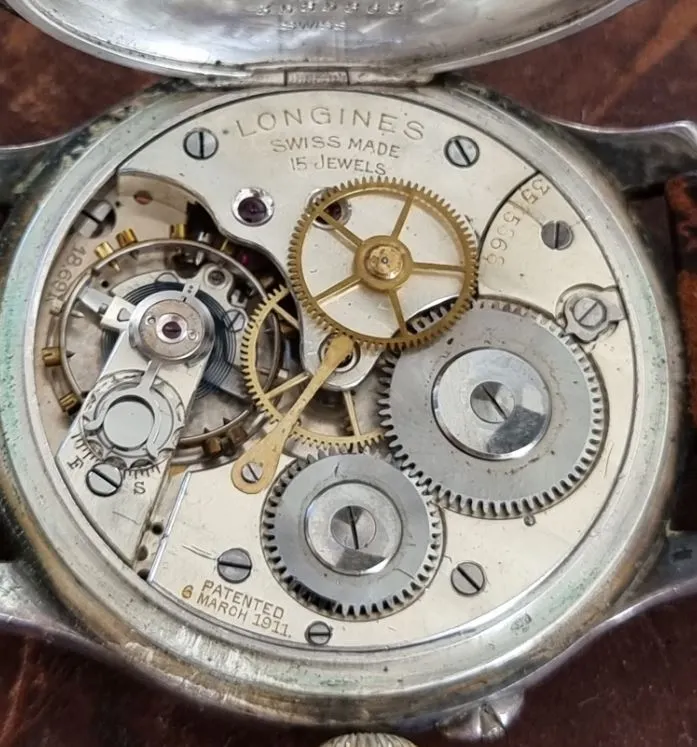
Which might be the most human thing about it. Whilst the document might not be Nobel-worthy, it highlights and stands as testament to a remarkable piece of Longines and aviation history – the world’s first second setting wristwatch.